When a Water Heater Fails This Bad It Takes Everything With It
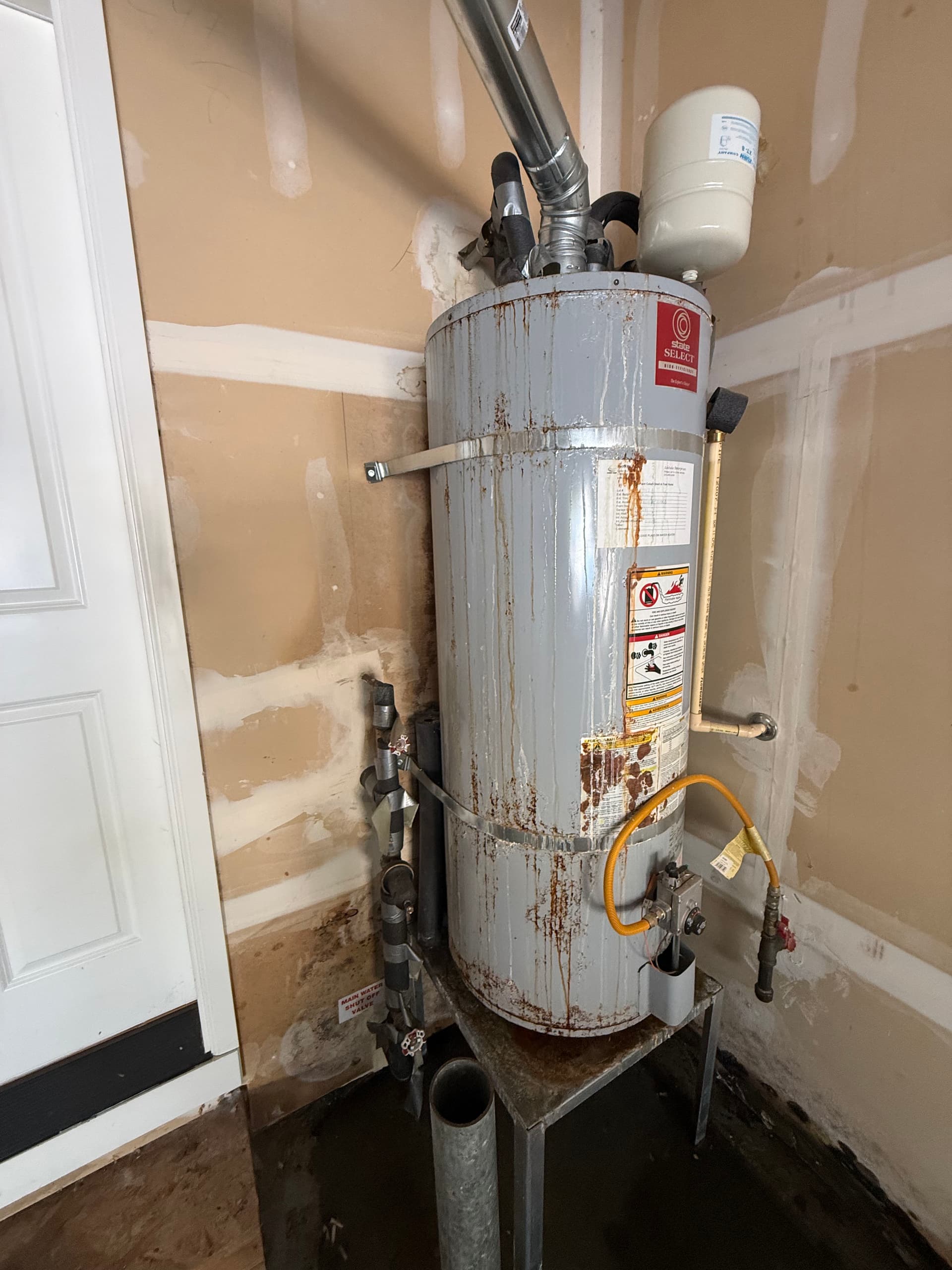
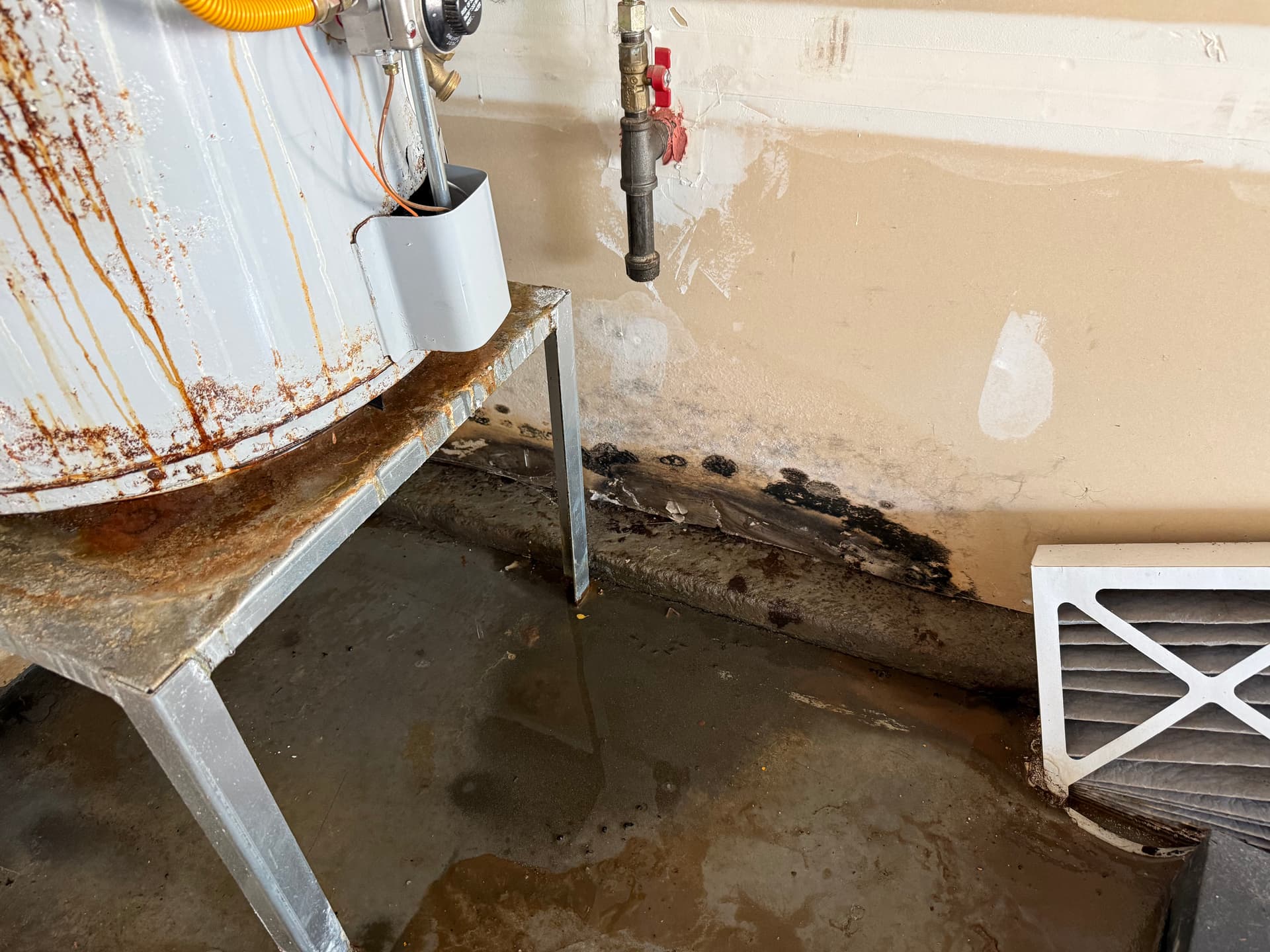
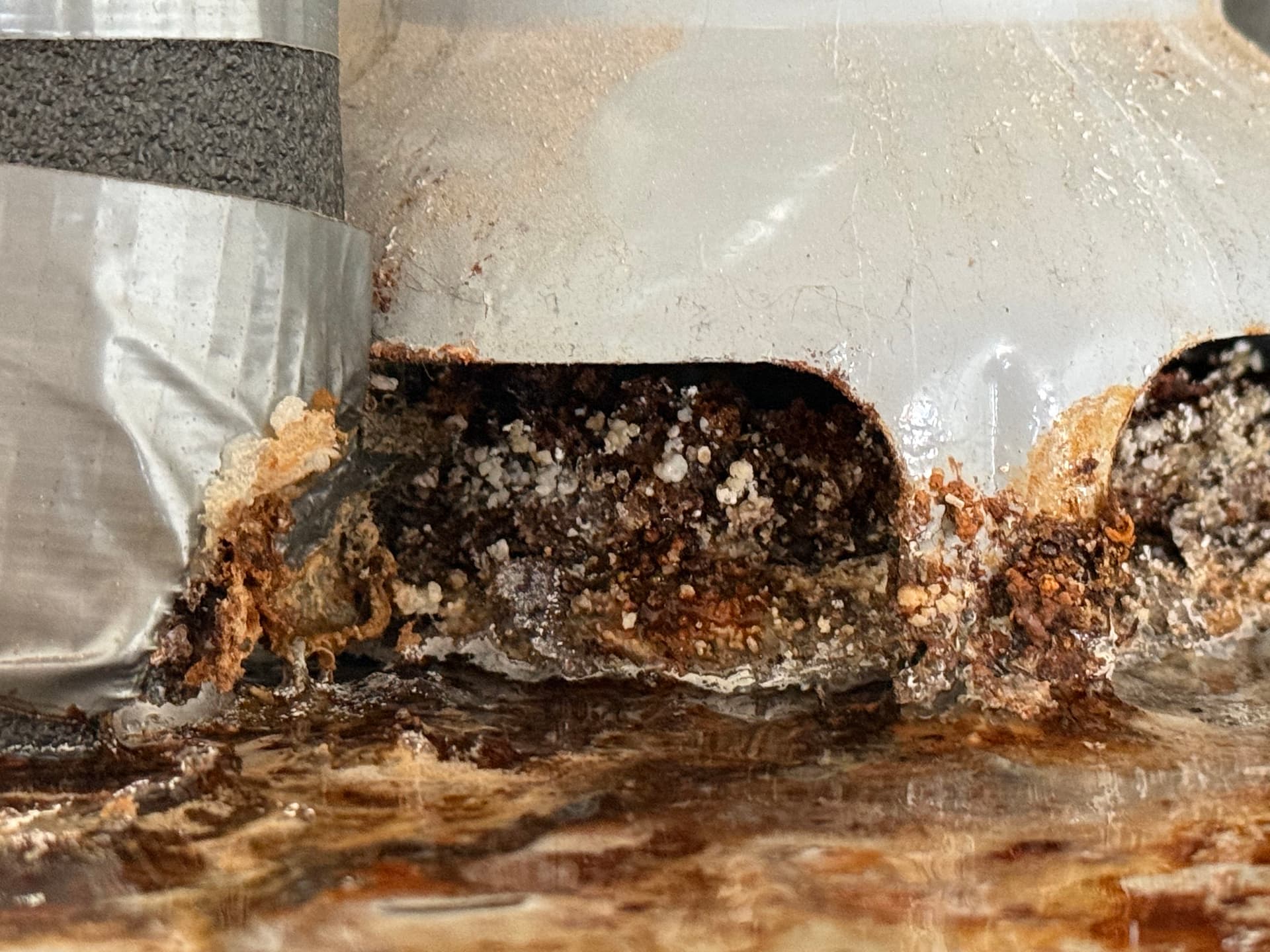
Most water heaters don't fail all at once. They fail slowly - a little rust here, a small drip there - until one day you've got standing water on the floor, mold climbing the wall, and a tank that's corroded completely through at the base. That's exactly the kind of situation we want homeowners to catch before it gets this far.
The rust streaking down the outside of a tank is one of the first visible signs. It means moisture has been working its way through the metal for a while. At that point, it's not really a question of if it will leak - it's a question of how bad it already is underneath.
When corrosion gets into the seam at the bottom of the tank, you're looking at a failure that no repair can fix. Mineral buildup, rust, and scale packed into that seam means the tank itself has been compromised. The floor gets wet. The wall absorbs moisture. Mold sets in. What started as a water heater issue becomes a much bigger problem that involves more than just plumbing.
This is why we always tell people - don't wait for cold water to be your first warning. By the time your shower goes cold, damage like this may already be happening behind the scenes. A quick visual check of your tank can tell you a lot. Look at the base. Look at the connections. Check for rust streaks, moisture, or any sign of standing water around the unit. If something looks off, it's worth having someone take a look.
Water heater repair and replacement is something we handle every day. We know what a tank looks like when it has life left in it, and we know when it's time to pull it out before it causes real damage. Catching it early is almost always cheaper and less stressful than dealing with the aftermath.