PRV and Expansion Tank Replacement in Edgewood
Most homeowners never think about water pressure until something breaks. A dripping faucet, banging pipes, or a water heater that keeps failing - these are all classic signs that pressure is running too high inside the home. The problem is, by the time those symptoms show up, the damage is already happening.
High water pressure quietly wears out fixtures, valves, appliances, and expansion tanks long before they should fail. A pressure reducing valve - or PRV - is what keeps incoming street pressure at a safe level for your home's plumbing system. When that valve fails, everything downstream takes the hit.
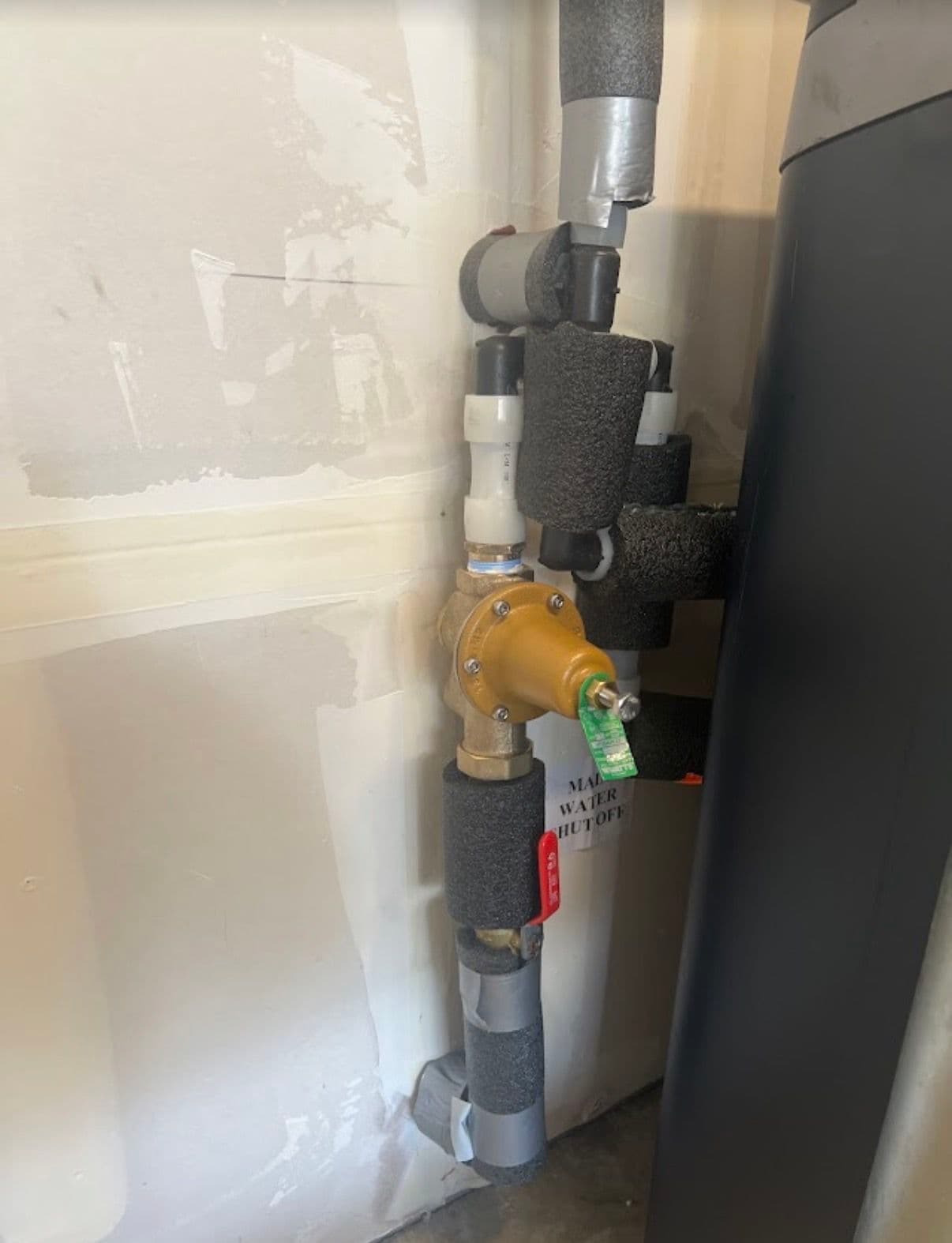
That's exactly what we were dealing with for a homeowner in Edgewood. The PRV had failed, and the expansion tank was done too. We replaced both and got the system back to where it should be. The new brass PRV is properly seated on the main line with insulated pipe connections above and below - clean, solid work that's built to last.
The expansion tank works hand-in-hand with the PRV. When water heats up, it expands. Without a functioning expansion tank to absorb that pressure, it has nowhere to go - and that puts stress on everything from the water heater to the fixtures throughout the house. Replacing both at the same time means the whole system is protected, not just one piece of it.
If you've been noticing banging pipes, fixtures that drip for no clear reason, or a water heater that seems to need repairs more often than it should - pressure could be the root cause. It's worth getting it checked before a bigger problem shows up.