Milton Homeowner Gets Same-Day Tankless Water Heater Replacement
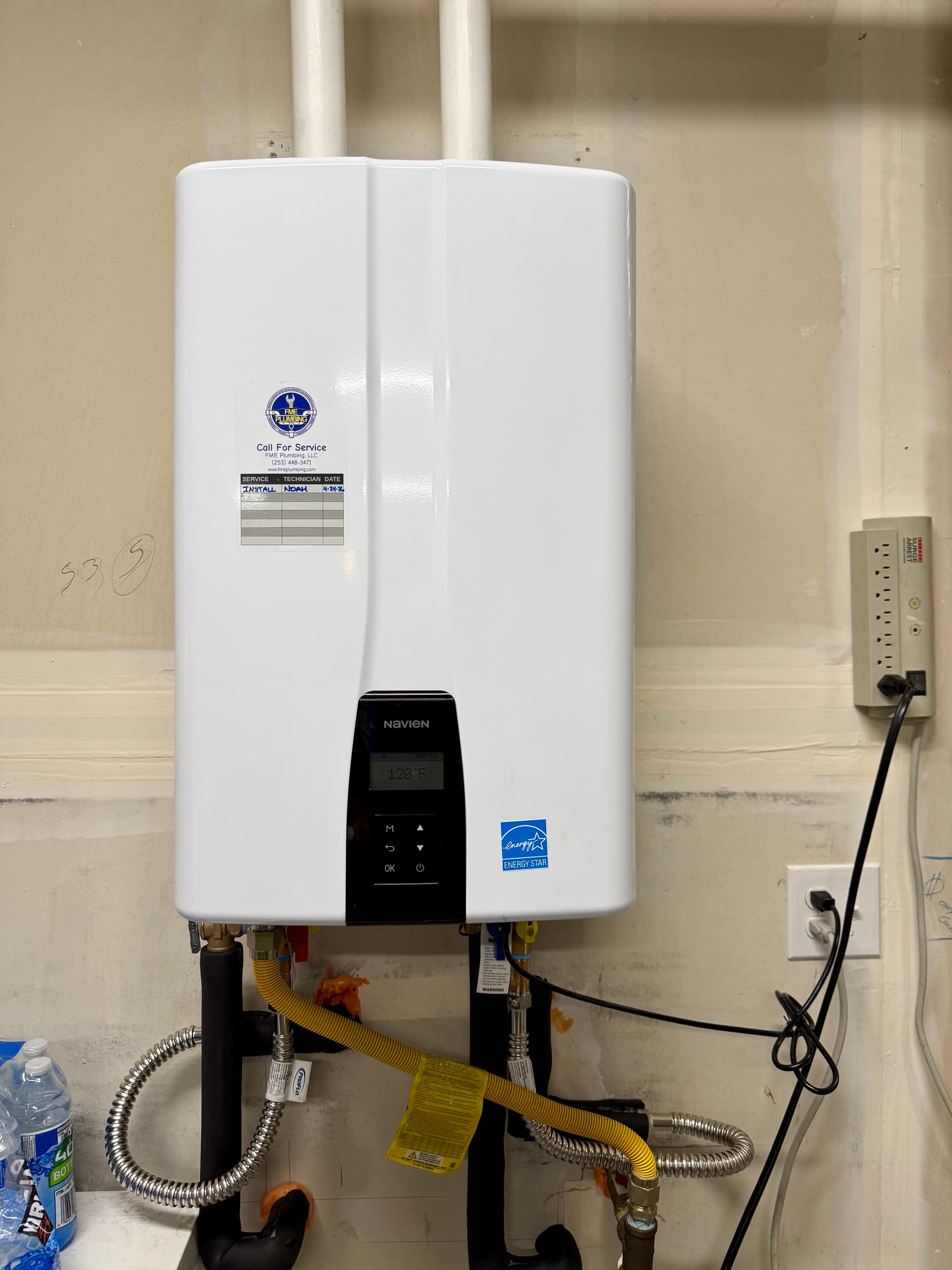
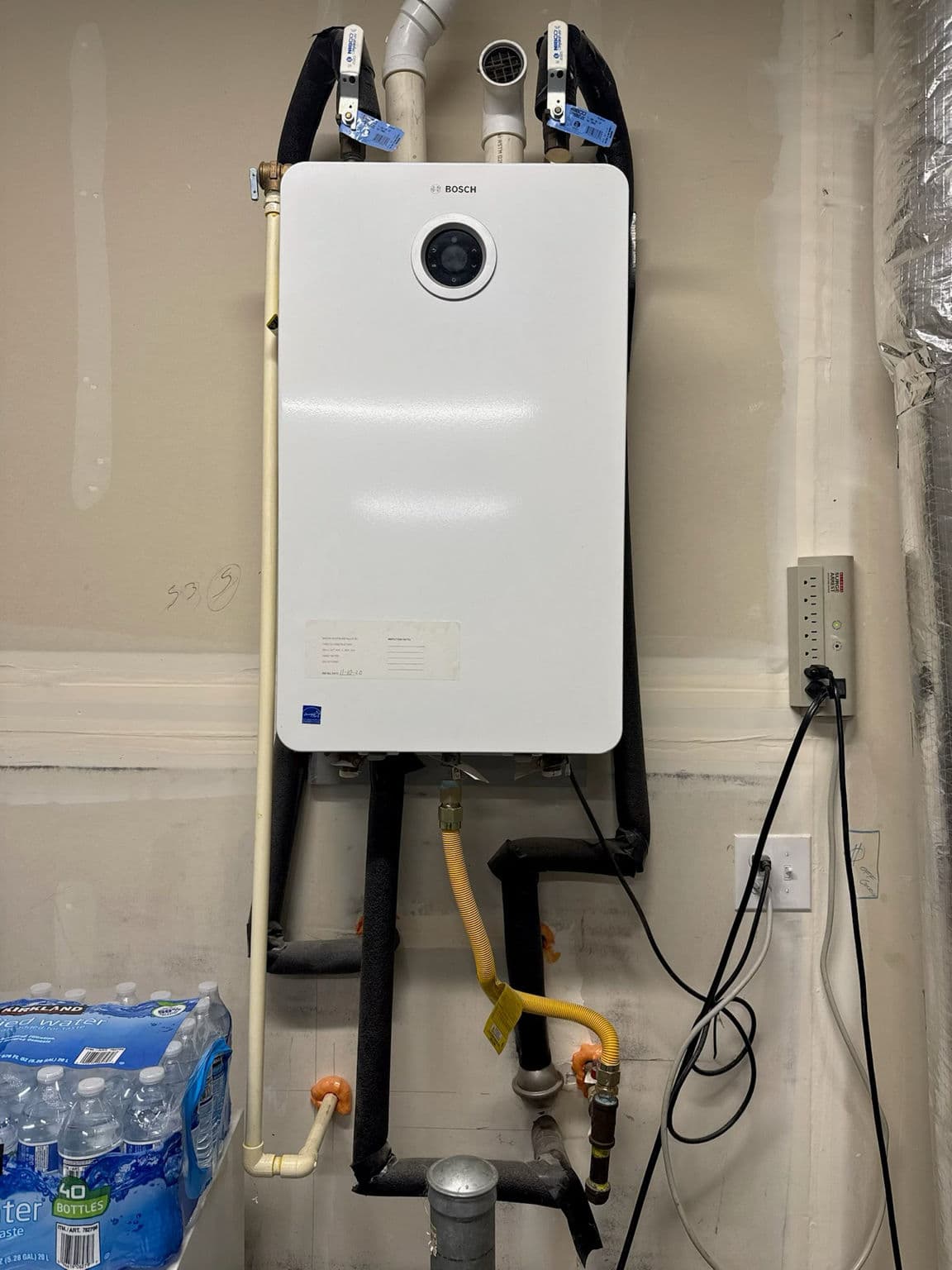
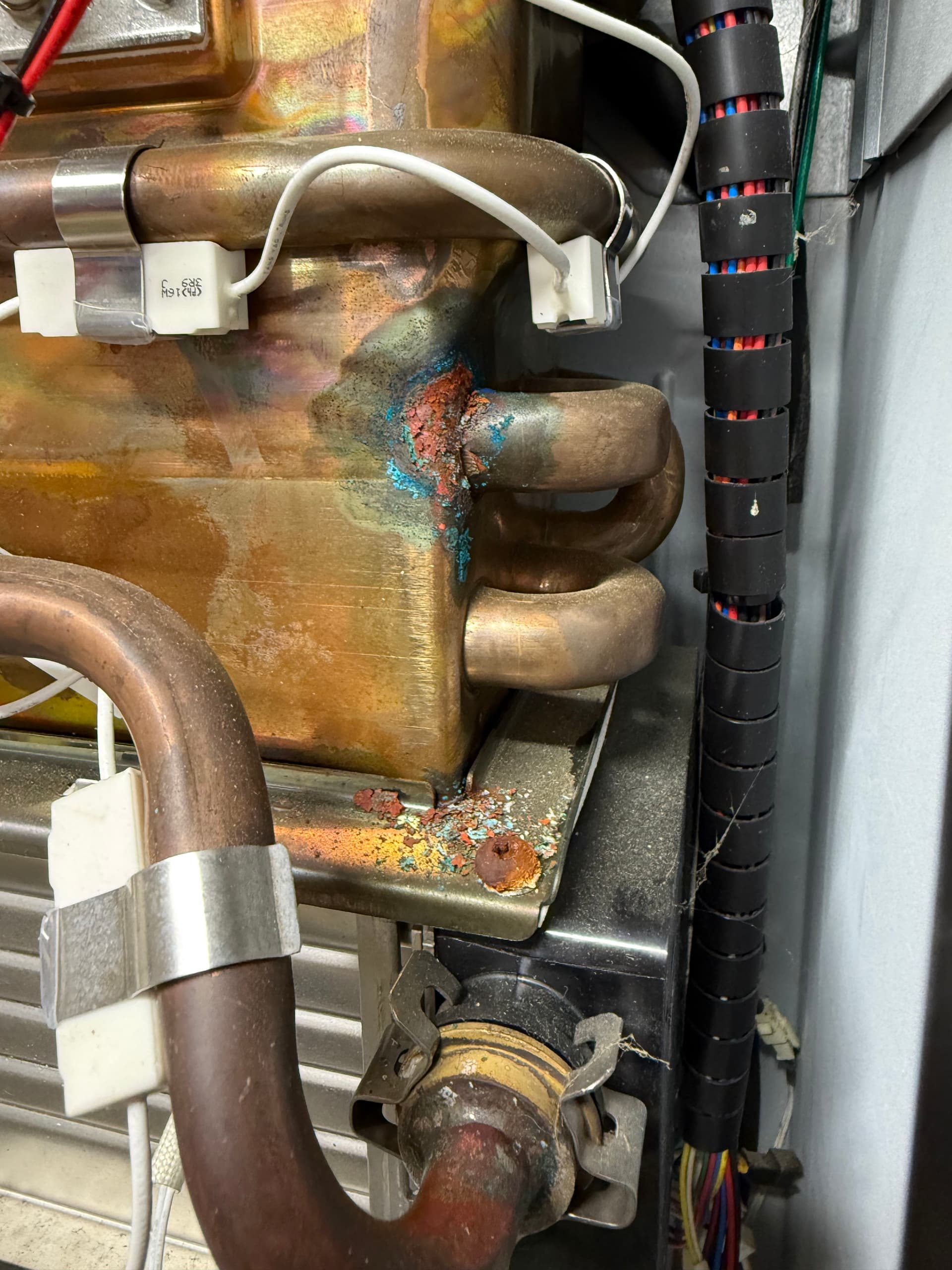
A Milton homeowner woke up with no hot water - and we had them back up and running the same day. That's the short version. The longer version is a textbook example of what happens when a tankless unit gets installed wrong and then ignored.
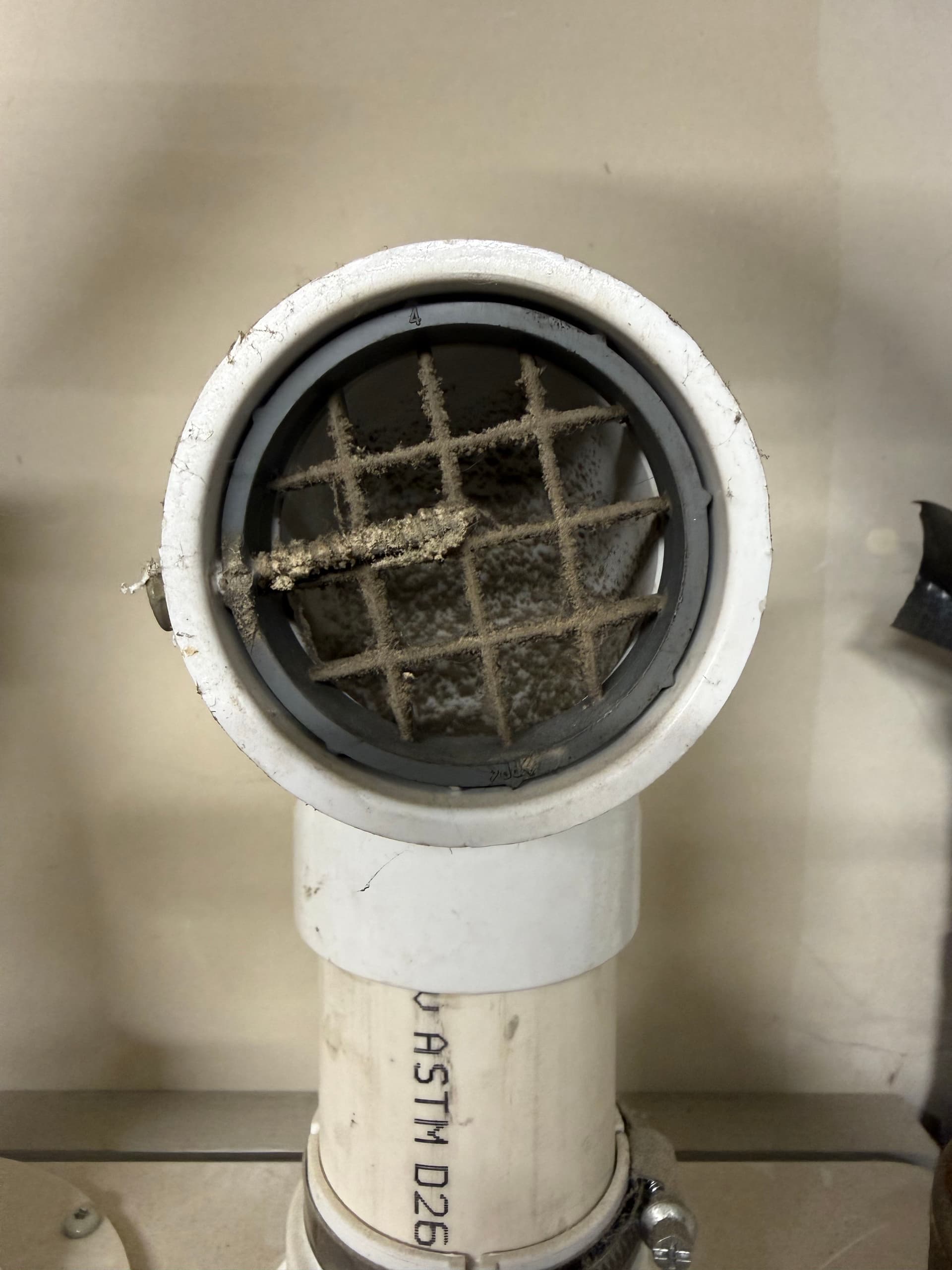
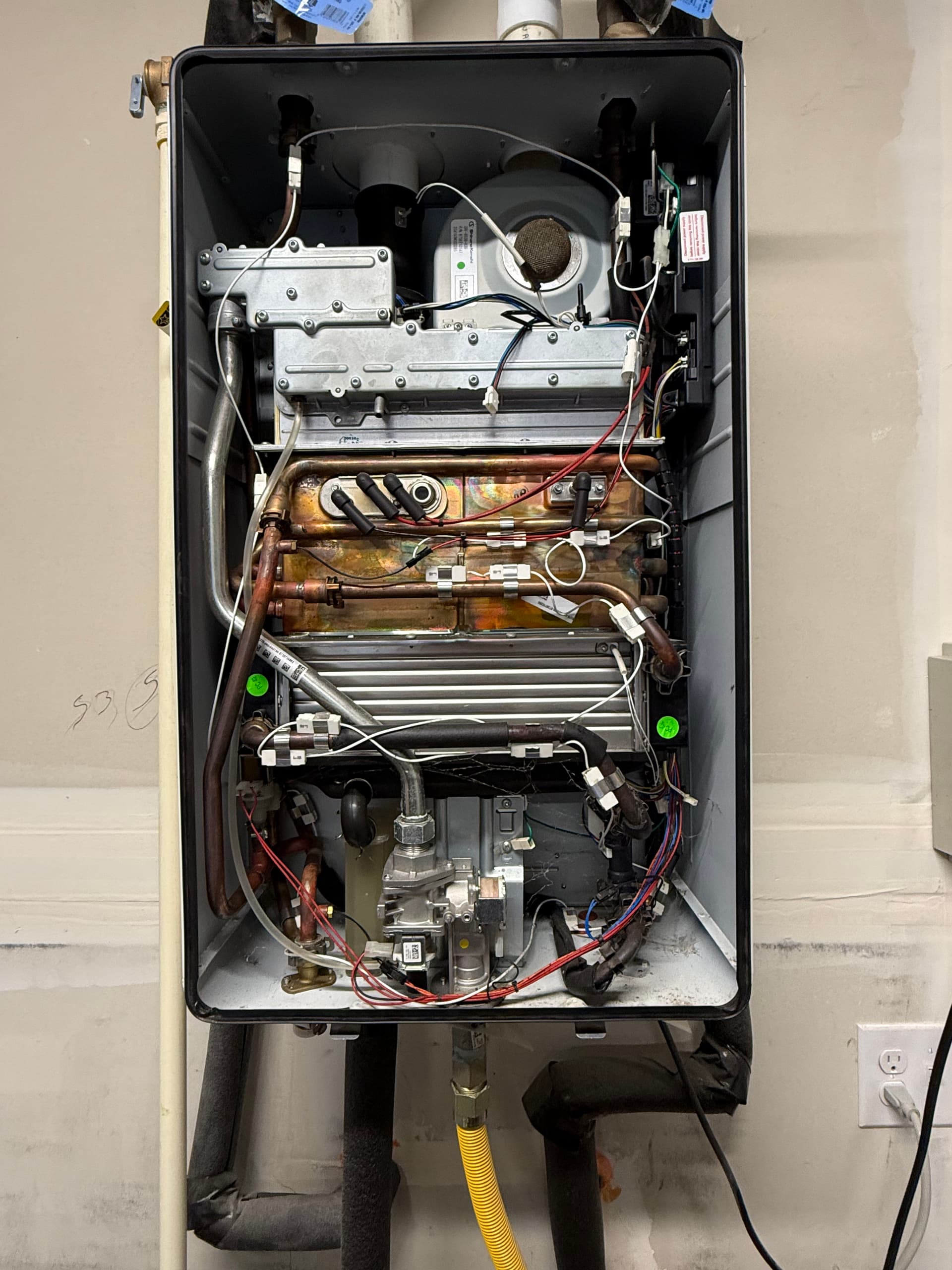
Here's what we were working with: a Bosch tankless unit that had been poorly installed from day one. The combustion air setup was wrong, the venting had never been done correctly, and there was zero maintenance history on the unit. The heat exchanger showed heavy corrosion and oxidation - the kind of copper discoloration and mineral buildup that tells you this thing has been struggling for a long time. The intake screen was completely clogged with dust and debris, which starves the burner of the air it needs to run safely and efficiently. When a tankless unit can't breathe right, it doesn't just run poorly - it can become a safety hazard.
Bad combustion air and clogged venting are two of the most common reasons tankless units fail early. The unit isn't the problem - the installation is. That's an important distinction, because it means a brand new unit installed the same wrong way will end up in the exact same situation a few years down the road.
We pulled the old unit and replaced it with a Navien high-efficiency system, set to 120 degrees right out of the gate. More importantly, we corrected the venting setup so the unit has proper combustion air and safe exhaust. Clean connections, correct pipe routing, everything done to spec. That's what a proper tankless installation actually looks like.
If your tankless is throwing error codes, shutting off randomly, or you've just lost hot water entirely - don't wait on it. A lot of these issues come down to installation problems or deferred maintenance, and they don't fix themselves. We do same-day service and we'll tell you straight what's going on.