Crawl Space Pinhole Leak Found and Fixed in Puyallup
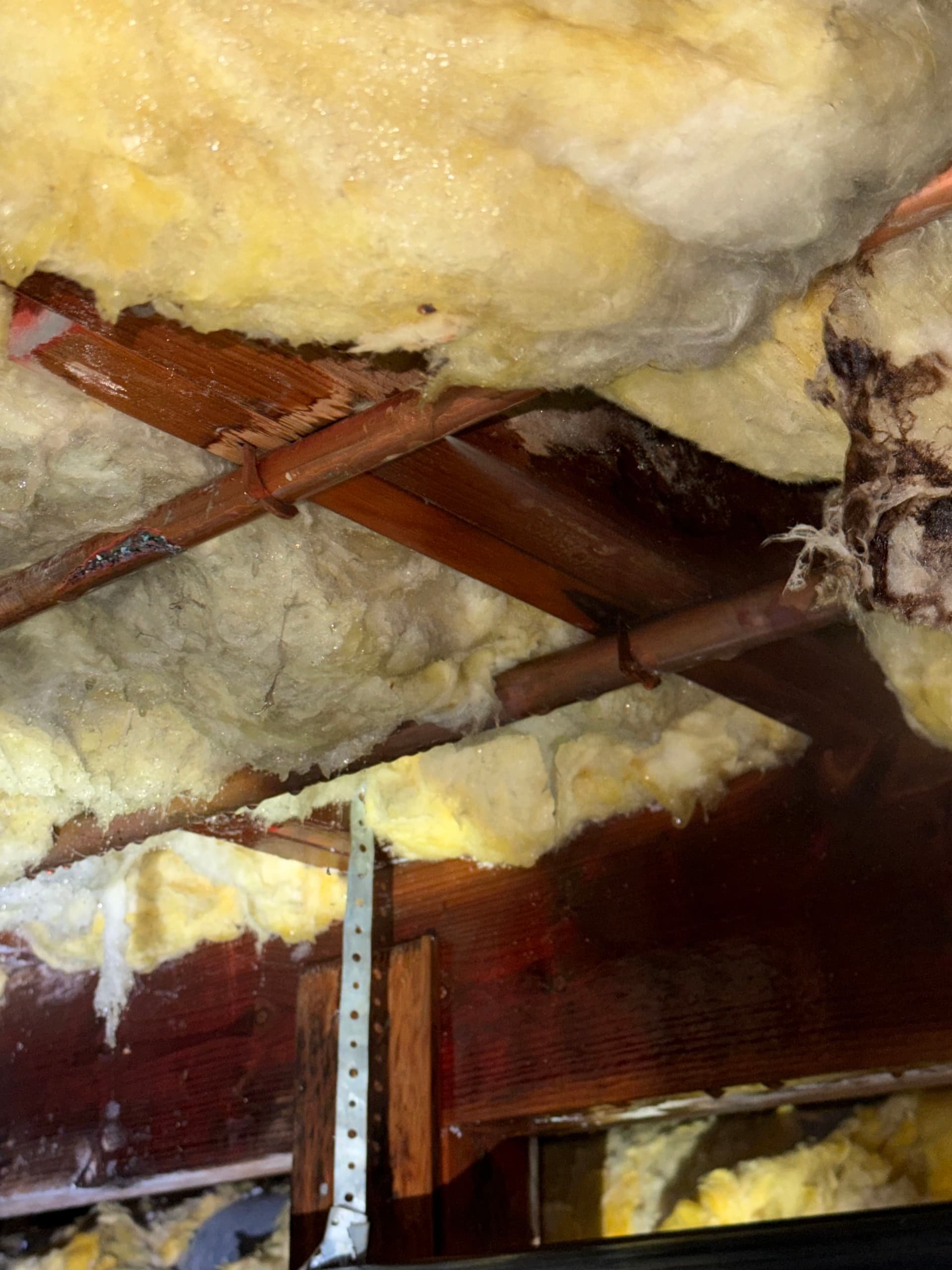
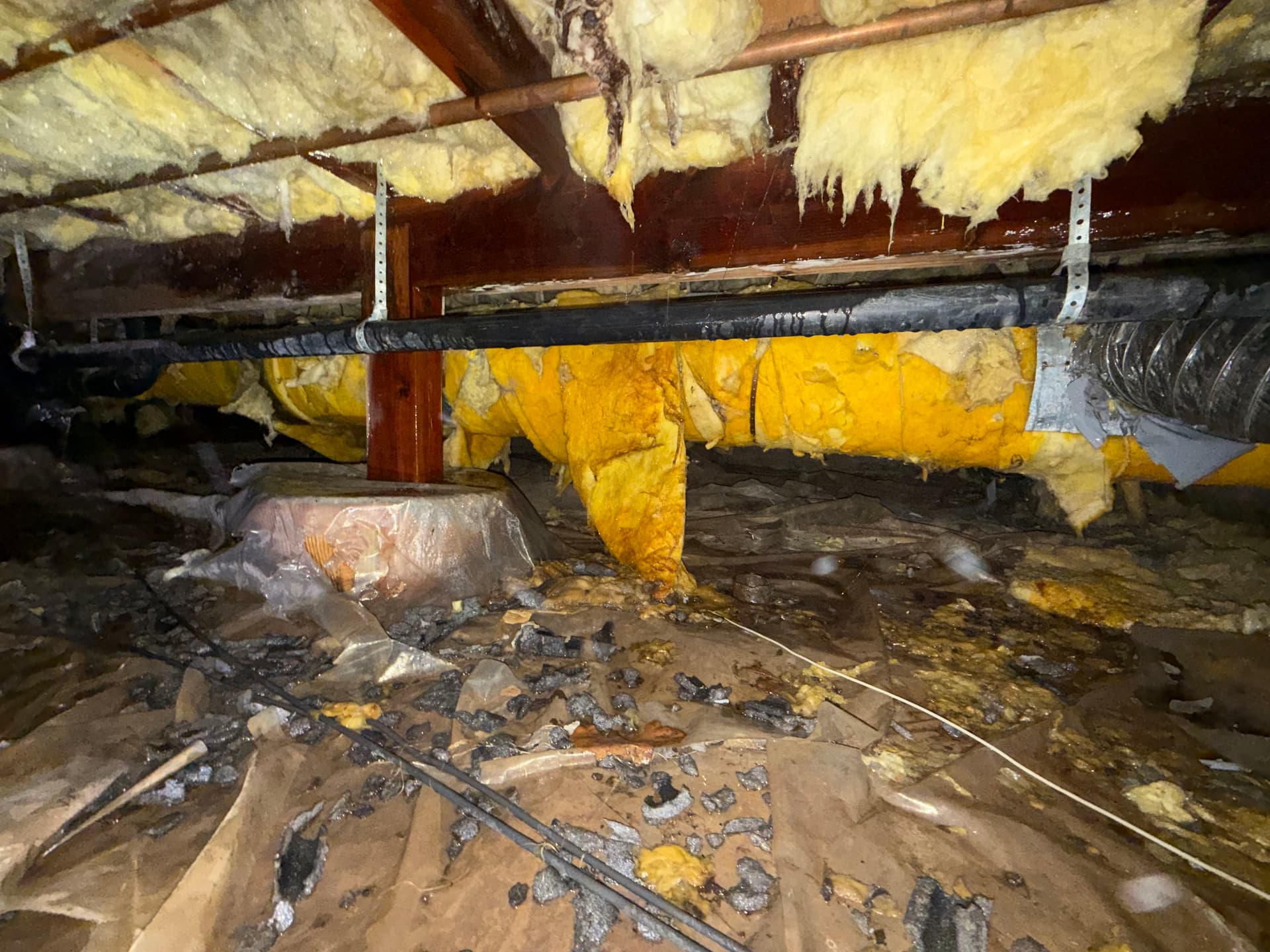
Pinhole leaks are sneaky. They don't flood your floor or set off alarms - they just sit there, dripping slowly, soaking everything around them. By the time most homeowners notice something is wrong inside the house, the damage underneath has already been building for months.
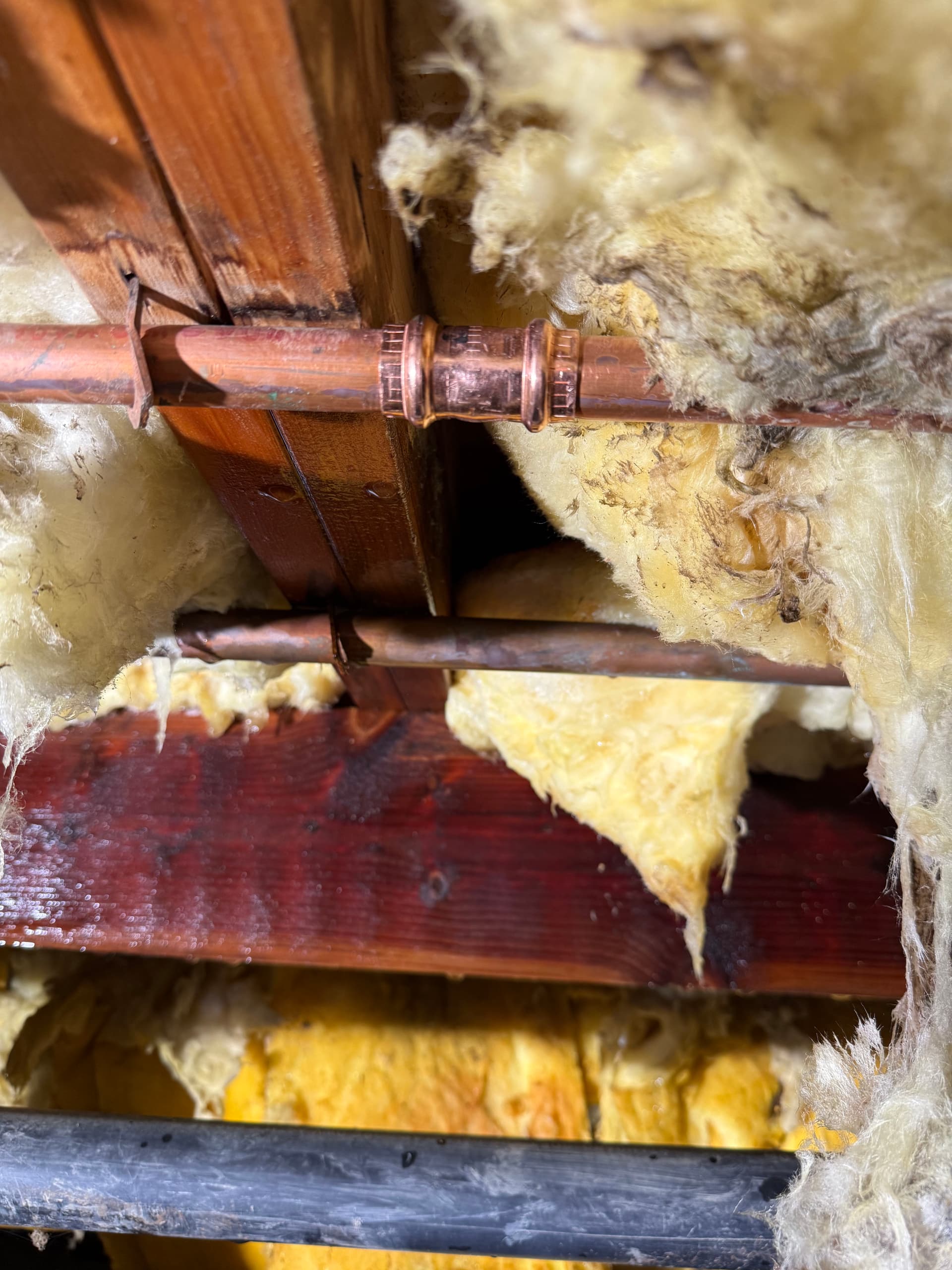
That's exactly what we were dealing with here. The leak was buried in the crawl space, tucked up against the framing and insulation. The surrounding wood was saturated and darkened, and the insulation had been absorbing moisture long enough to show serious deterioration. This is the kind of thing that doesn't show up on your radar until you smell something musty or notice your water bill creeping up for no obvious reason.
We tracked down the source on the copper line, cut out the compromised section, and made a clean repair with a solid copper coupling. Once the repair was done, we pressure tested the system to confirm the leak was fully resolved - not just patched over. That step matters. A lot of leaks get "fixed" without anyone verifying the fix actually held.
If your home has older copper pipes running through the crawl space, this is worth paying attention to. Pinhole leaks can develop from corrosion, soil chemistry, or just age. They're common, they're quiet, and they cause real structural damage when left alone. Musty smells, unexplained pressure drops, or a higher water bill are all signs worth investigating.