A Leaking Water Heater That Was Way Past Done
A small drip is easy to ignore. You tell yourself it's fine, maybe it slows down, maybe it stops on its own. But here's the thing - water heaters don't get better on their own. They get worse. And when they finally give out completely, you're not just dealing with no hot water. You're dealing with water damage, cleanup, and a much bigger bill than if you'd caught it early.
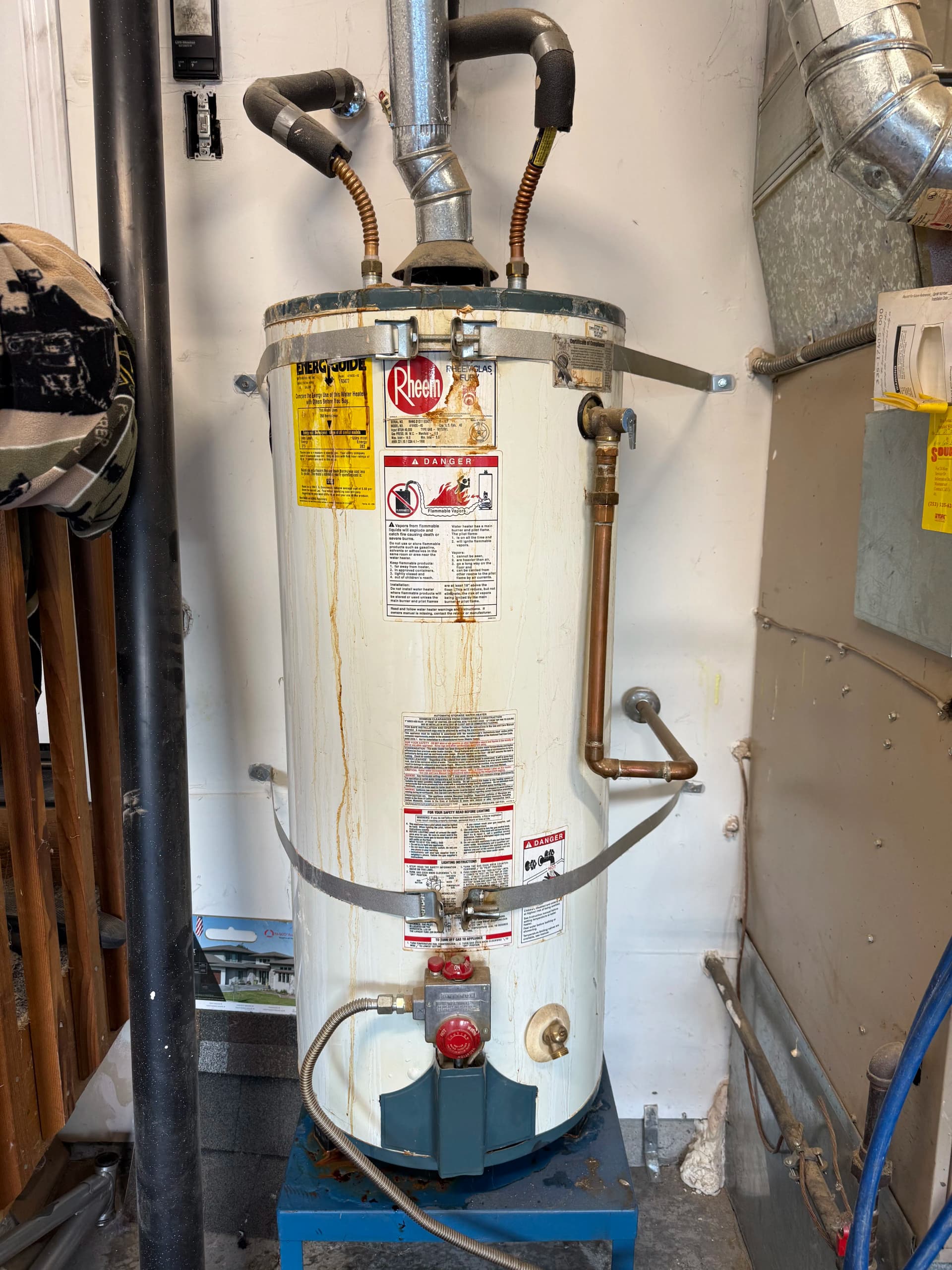
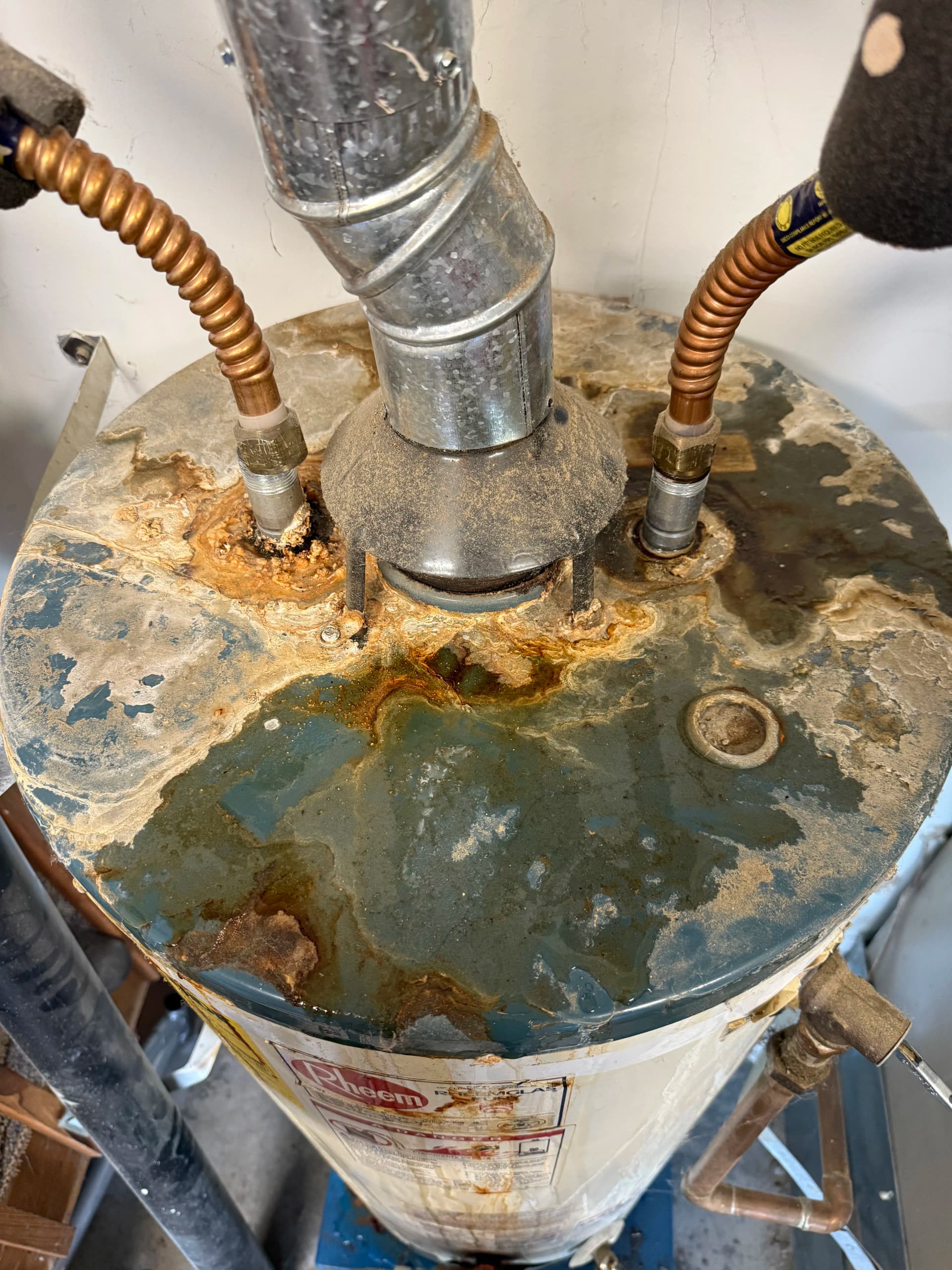
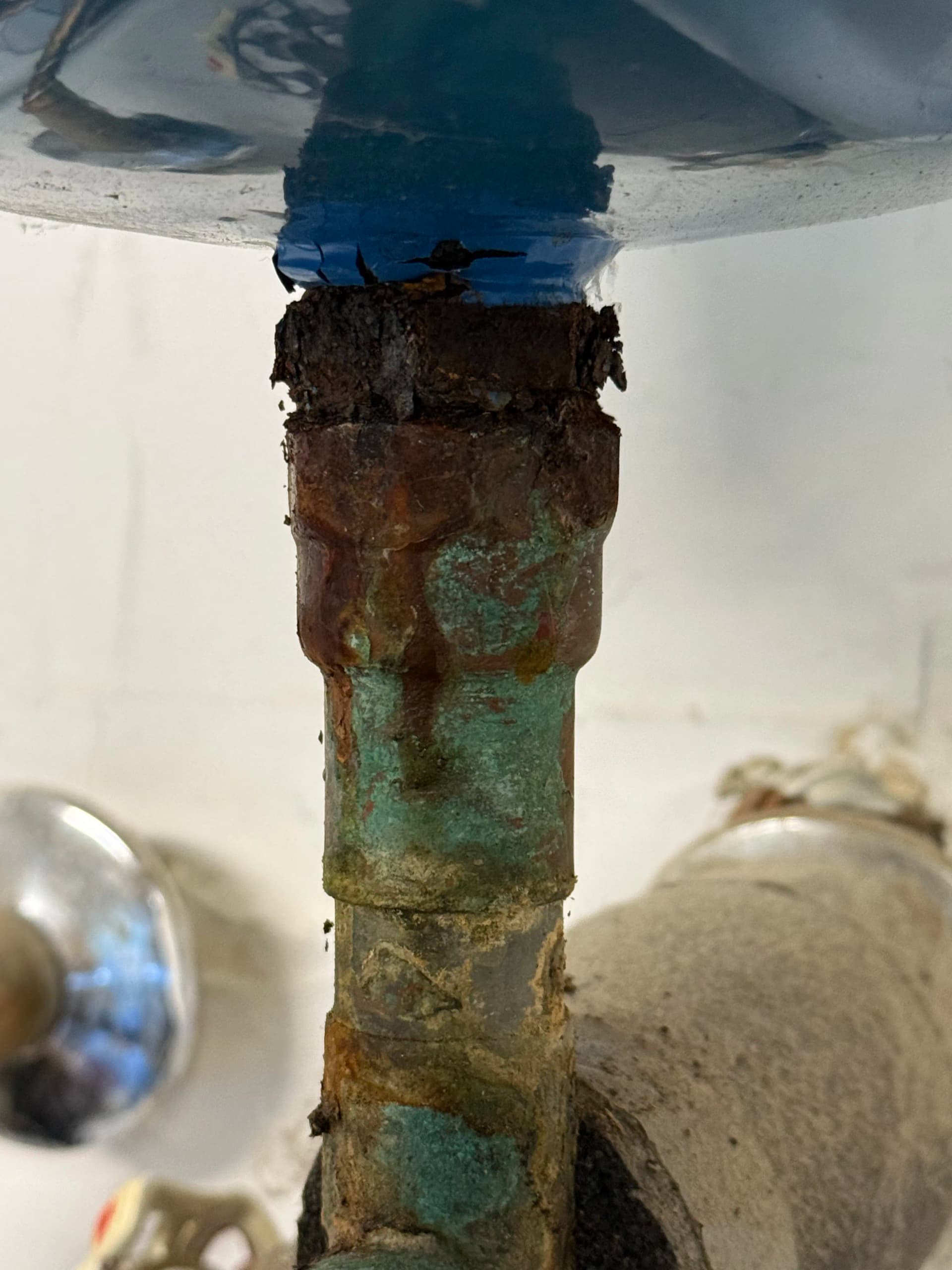
This one had been leaking for a while. The top of the tank tells the whole story - heavy mineral buildup, corrosion eating through the surface, rust running down the sides. The supply line connections were corroded through, with that green oxidation you get when water has been sitting and seeping around copper fittings for a long time. This unit wasn't going to last another season.
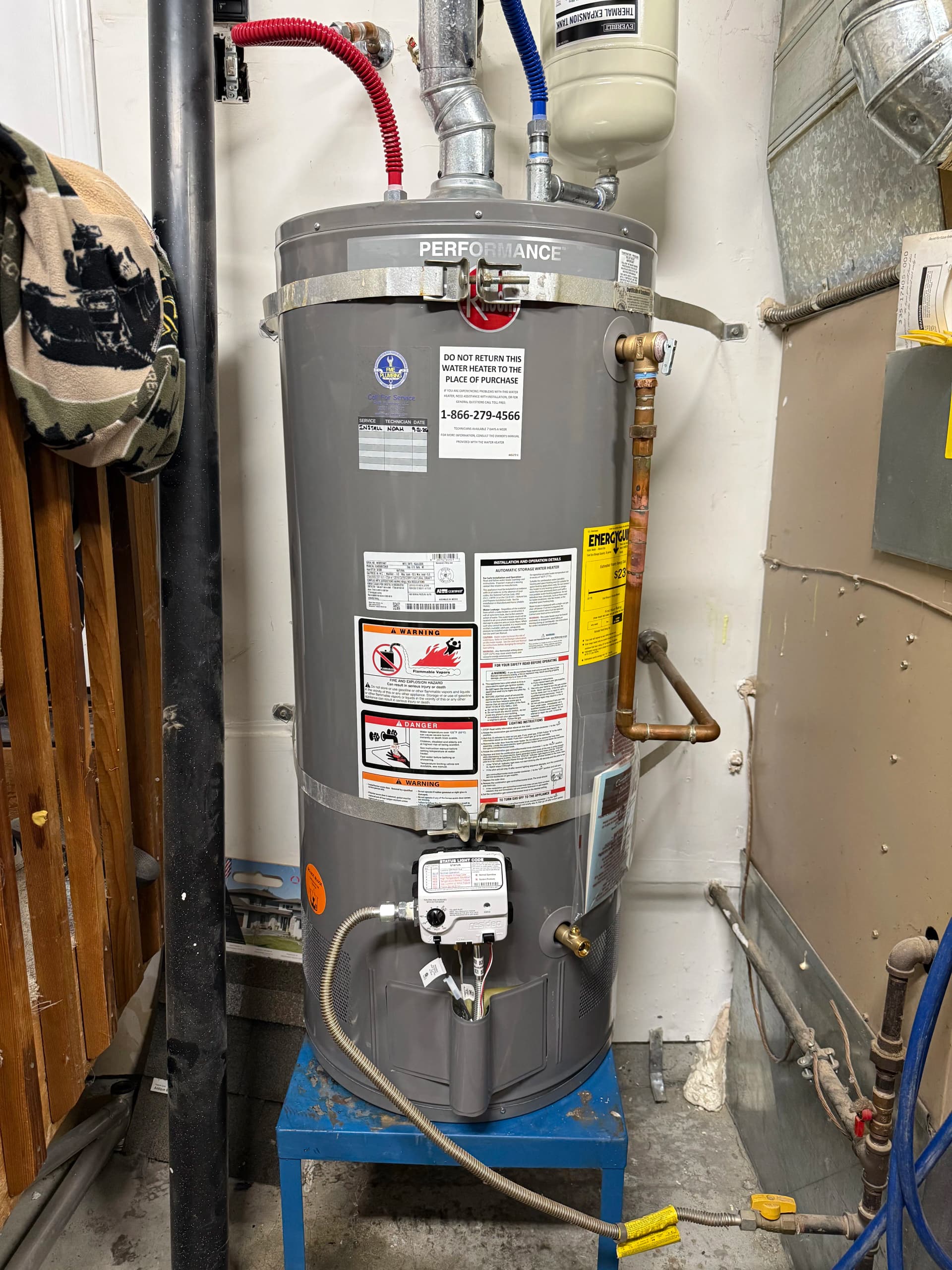
We pulled the old unit and replaced it with a new 40-gallon gas water heater. Along with the new tank, we ran new flexible supply lines and added an expansion tank set to the correct pressure. The expansion tank is something a lot of people don't think about, but it's important - it protects the system from pressure buildup that can shorten the life of your new unit or cause problems down the line.
The difference between the before and after here is pretty clear. Clean connections, a properly sized expansion tank overhead, and a unit that's actually built to handle the job. No rust, no corrosion, no slow drip quietly doing damage behind the scenes. Just reliable hot water done right.
If your water heater is showing rust stains, leaking around fittings, or just struggling to keep up, don't wait until it fails completely. Water heater repair and replacement is one of those things where catching it early saves you a lot of headache - and a lot of money.