A Failed Pressure Reducing Valve Was Wrecking This Home's Plumbing
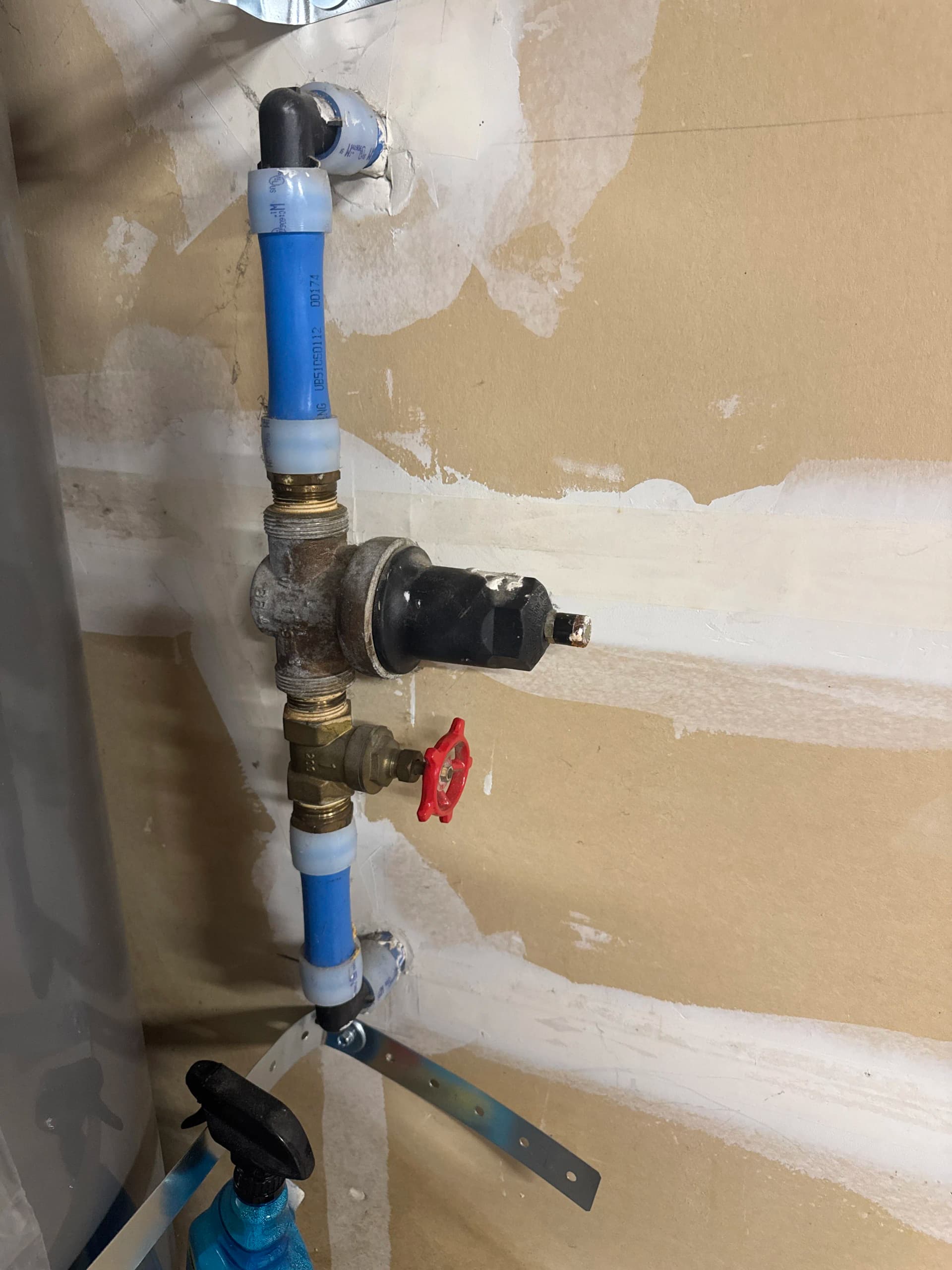
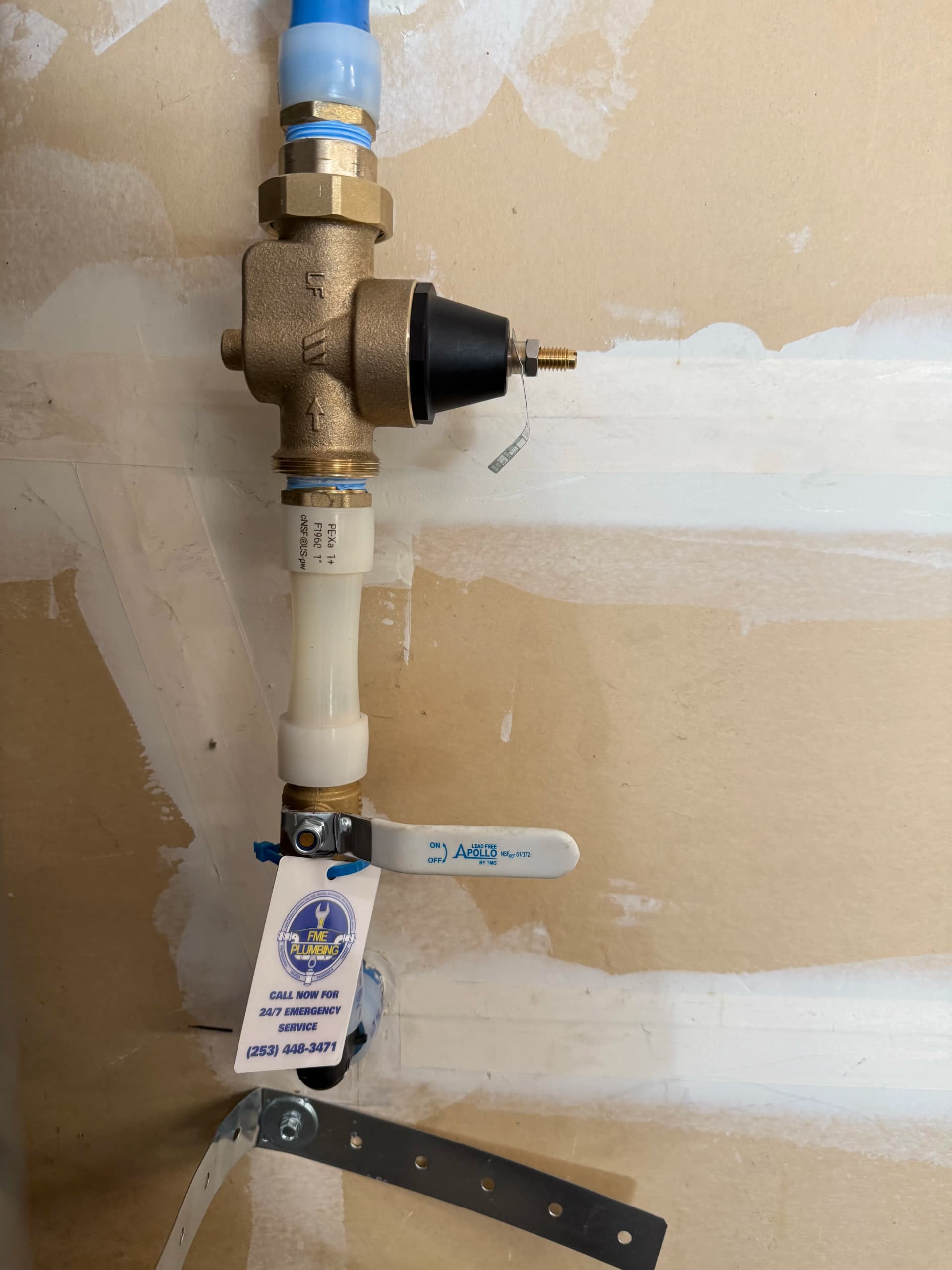
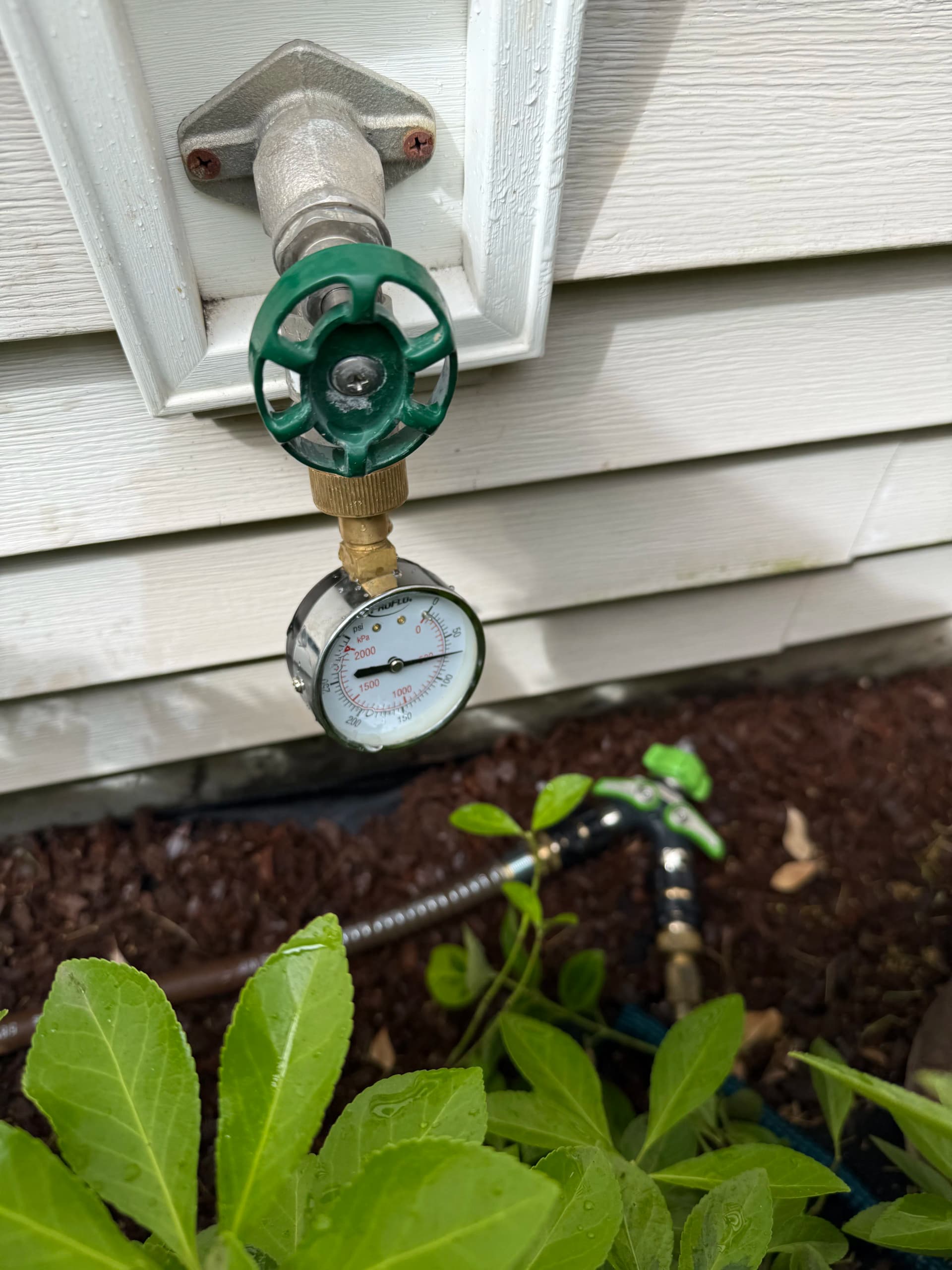
It started as a late-night leak call. But once we got eyes on the system, it was clear the leak was just a symptom. The real problem was a failed PRV - a pressure reducing valve - that had stopped doing its job. The line pressure had climbed way beyond safe levels, and that kind of stress doesn't just cause one leak. It hammers every fixture, fitting, and appliance in the house.
Most homeowners have no idea what their water pressure is running at. And that's totally understandable - it's not something you can see or hear. But when a PRV fails, the incoming pressure from the street hits your pipes unchecked. That's hard on water heaters, washing machine hoses, faucet cartridges, and even the joints in your supply lines. Over time, it causes damage that adds up fast.
We pulled the old failed valve and replaced it with a new brass PRV set to a safe 65 PSI. We also swapped out the old gate valve - the kind with the multi-turn red wheel handle - for a new Apollo 1/4-turn ball valve. Gate valves are notorious for sticking, corroding, and failing when you need them most. A quarter-turn ball valve is faster, more reliable, and gives you a clean shutoff every time. Before wrapping up, we tested the pressure at the outdoor hose bib with a gauge to confirm everything was dialed in correctly.
If your home has unexplained leaks, fixtures that wear out faster than they should, or a water heater that keeps cycling its pressure relief valve - high water pressure could be the culprit. It's one of those hidden issues that quietly does damage until something finally gives. A quick pressure check is an easy first step.